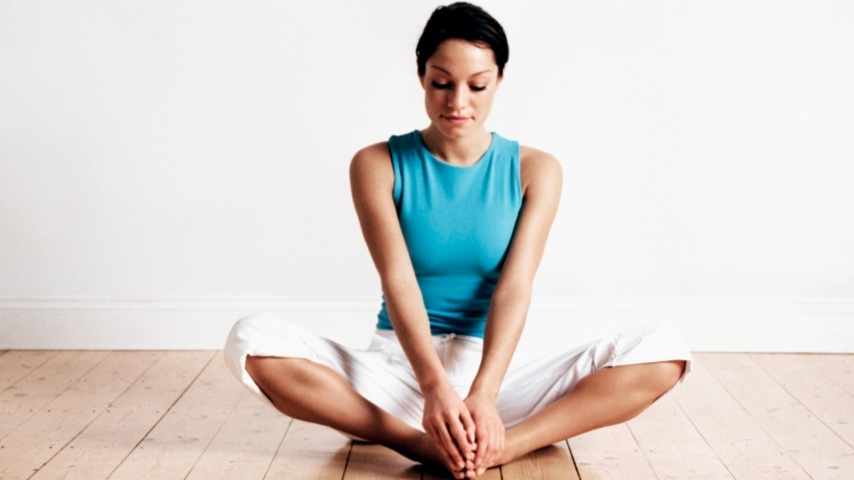
bound angle pose yoga, known in Sanskrit as Baddha Konasana, is a popular seated pose in yoga. Sometimes, people call this pose Butterfly Pose or Cobbler’s Pose. It looks simple, but it offers many physical, mental, and emotional benefits when practiced mindfully.
The pose connects strength and flexibility. It helps open the body and calm the mind. Suitable for those who are just beginning, but also for advanced practitioners.
People usually associate Baddha Konasana with pelvic health and calming the nervous system. But, its effects go much deeper than the flexibility. Bound Angle Pose is a pose that encourages reflection as well as an easy release from gravity.
Meaning and Origins of Baddha Konasana
Its Sanskrit term Baddha Konasana can be broken into three components:
- Baddha – restrained or bound
- Kona – angle
- Asana asana position or sit
Together, the name refers into “Bound Angle Pose.” The form of the legs creates an angle or diamond with the feet bonded in the vicinity of pelvis.
Cobblers in India used the old practice. They would sit for long hours with the soles of their feet together. We call this position Cobbler’s Pose.
Yoga texts later noted that this seated posture had both therapeutic and meditative benefits. Traditional Hatha Yoga practices included it.
In yoga, practitioners recognize Baddha Konasana as a pose that helps the kidneys and reproductive organs. It also benefits the urinary tract and digestion. People have used it for a long time to prepare for pranayama and meditation. It helps stabilize the mind and body.
Step-by-Step Instructions bound angle pose yoga
- Begin with a sitting position.
- You should sit on the floor, with your legs extended to the front (Dandasana). Stretch your spine out and the ground beneath your seated bones.
- Join the soles your feet together.
- Bring your feet together. Bend your knees, and then draw your heels towards your pelvis. Let your knees gently slide out to the sides as connect the soles of your feet in a unified fashion.
- Change the distance between your feet
- To achieve a more gentle stretch, position your feet further off the pelvis. To create a more open hip your heels should be pulled closer towards the groin.
- Make sure to hold your ankles or feet
- Connect the fingers of your ankles, feet or shins. Relax your elbows slightly on the inner thighs, without pushing them to move downwards.
- Stretch the spine
- Then exhale and lift up through the top that is on top of our heads, expanding the chest while roll shoulder back downwards.
- Keep your spine straight or fold inwards
- Then fold forward. You can keep your spine upright to get a grounded or meditative versions or hinge forward from your hips, while keeping an extended spine.
- Breathe deeply.
- hold the posture for 1-5 minutes Breathing slowly and equally. Each time you exhale, let the thighs and hips to relax.
- Release slowly
- to leave, inhale and raise the body (if folded) then bring your knees in your hands. Then, move the legs forward.
Benefits of Baddha Konasana
Hip and Groin Opening
One well-known benefit of Bound Angle Pose is that it helps release the hips and inner hips. The tightness of the hips is common because of prolonged sitting as well as stress and restricted movements. Practicing this posture regularly helps improve the flexibility and movement of your hip joint, adductors, and groin muscles.
Improved Pelvic Health
Baddha Konasana can improve circulation in the pelvic region that improves the health of the reproductive organs. Many experts recommend yoga therapy for menstrual pain, mild pelvic tension, and overall reproductive health. This is especially true when people practice it gently.
Support for the Spine and Posture
If you practice it using a straight torso, this pose helps strengthen the muscles of the spine, and promotes correct alignment. It helps fight slouching and makes you aware of your posture while sitting. This makes it great for yoga and everyday life.
Digestive Stimulation
The gentle compression and the opening of the abdominal region may help to stimulate digestion. Practice Bound Angle Pose following meals (with sufficient time to digest) can help improve digestion and increase awareness.
Mental and Emotional Benefits
Beyond the physical benefits, Bound Angle Pose has significant effects upon the nervous system as well as the emotions.
- Relaxes the mind: Sit in a grounded posture. the pose promotes focus and a sense of relaxation.
- Reduces anxiety and stress: Slow breathing combined with hip opening could aid in releasing tension, emotional pressure and stress.
- Inspires reflection: The stillness of the pose makes it suitable for mindfulness, meditation or even breathwork.
- Develops the ability to be patient: The pose becomes harder over time. This teaches practitioners to let go of expectations and practice non-attachment.
Spiritual and Yogic Perspective
From a spiritual perspective The main influence of Baddha Konasana is your Muladhara (Root Chakra) and Svadhisthana (Sacral Chakra).
- root Chakra: The grounded posture of a seated person promotes security, stability and a connection to the earth.
- Sacral Chakra: The hip opening is a source of emotions, creativity and sensual awareness.
In yoga philosophy, practitioners view the hips as a place where unresolved emotions reside. Although this is a symbolic concept and not anatomical, many practitioners experience emotional release after extended hip-opening routines. Bound Angle Pose is a safe and gentle method to explore the release using awareness.
Bound Angle Pose Yoga Variations and Modifications
Supported Bound Angle Pose
Props can help assist in making the pose more accessible and relaxing:
- Put blockages or supports beneath the knees to provide support.
- Relax on a cushion or blanket to lift the hips and ease tension on the lower back.
- Utilize the strap that wraps around your hips and the feet to keep them in alignment, without the need to grip.
Reclined Bound Angle Pose (Supta Baddha Konasana)
Another option is to lie back and place the soles of your feet together. You can use cushions or bolsters for support.
Benefits include:
- Relaxation deep
- Relaxing the nervous system
- Gentle opening, without effort to move
This variation is widely employed in restorative yoga and prenatal yoga practices.
Dynamic Butterfly
For a more vigorous version that is more active, knees gently move between a thump and a sway in tune with breath. This is a great way to warm up your hips and improve circulation. However, do it carefully and without force.
Common Mistakes and How to Avoid Them
- Inducing knees to drop
- by pressing your knees to the floor could cause strain on the hips or the groin. Instead let gravity do the lifting.
- A rounding of the back
- Reclining the chest decreases the benefits of this pose. Concentrate on lengthening upwards before folding forward.
- The feet are pulled too tightly
- Pulling the heels too tight can cause discomfort in hips or knees. You can adjust the distance to fit your body.
- Tension in the jaw and shoulders.
- You can relax the upper part of your body and your face. This helps you enjoy the soothing effects of the posture.
Therapeutic Applications and Precautions
Helpful For:
- A mild lower back pain
- Menstrual cramps (with moderate practice)
- Stress and anxiety
- A lifestyle that is sedentary
Use Caution If:
- If you have suffered recently suffered hip, knee, or groin injury
- There is a acute discomfort (not sensation) during the pose.
If you have injuries or chronic illnesses, it is best to exercise with a certified yoga instructor or therapist.
Bound Angle Pose in Meditation and Daily Life
Baddha Konasana does more than just a physical form it’s an exercise in practice of being present. The posture allows you to take a moment breathe deeply, take a deep breath, and pay attention the body. The flexibility of the legs and the straight spine show openness and balance. This means you should stay grounded and remain open at the same time.
On the floor, lessons from Bound Angle Pose can help in daily life. You learn to hold the pose and when to relax. This builds patience and helps you feel comfortable in silence.
Like many yoga poses, the true value of Bound Angle Pose is not in flexibility. Instead, it lies in the mindfulness that it helps develop.
Conclusion
Bound Angle Pose (Baddha Konasana) is a simple but extremely beneficial pose that is extremely effective. It helps your physical health by opening the hips, improving posture, and boosting circulation. It also promotes balance between your mind and body. Its versatility makes it accessible to people of all levels and its tranquility lets you explore your inner self.
If practiced in an active yoga sequence, Baddha Konasana can be restorative or meditative. It offers a chance to connect with your breath and body. As time goes by, this simple sitting position can teach us a lot. True flexibility comes not from force, but from mindfulness, patience, and letting go.
About the Author