
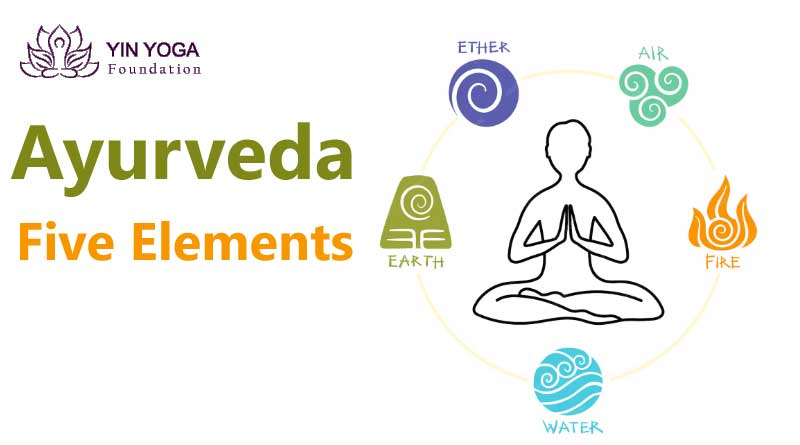
Five Elements of Ayurveda
Ayurveda is an ancient science of life that started in India over 5,000 years ago. The deep understanding of nature and its connection to the human body and mind forms the basis. At the heart of Ayurvedic philosophy is the idea of the Pancha Mahabhuta, or the Five Elements of Ayurveda.
These five elements—Earth, Water, Fire, Air, and Ether (Space)—are the basic building blocks of the universe. They make up everything, including our bodies, thoughts, feelings, and awareness.
Unlike modern medicine, which often focuses on treating symptoms, Ayurveda emphasizes balance at the elemental level. When the five elements are in harmony, health naturally flourishes; when they are disturbed, disease and discomfort arise. Knowing these elements helps us live more mindfully, eat better, and match our daily routines with nature’s rhythms.
The Concept of Pancha Mahabhuta – Five Elements of Ayurveda
The Sanskrit term Pancha Mahabhuta translates to “five great elements.” Ayurveda states that everything in the universe consists of five elements.
Both living and non-living things contain these elements. They exist in different amounts.
Everything around us shows these basic forces. This includes the food we eat and the thoughts we have. It also includes mountains, rivers, breath, and space.
In the human body, the five elements combine to form the three doshas:
- Vata (Air + Ether)
- Pitta (Fire + Water)
- Kapha (Earth + Water)
These doshas govern all physiological and psychological processes. By learning about the five elements, we can better understand how the doshas work. This knowledge helps us keep balance in our daily lives.
1. Earth Element (Prithvi)
Qualities of Earth
The Earth element symbolizes solidity, stability, weight, density, and structure. It plays a crucial role in providing form and strength to all things in the physical realm.
Earth in the Human Body
In the body, Earth manifests as:
- Bones
- Muscles
- Teeth
- Skin
- Nails
- Organs and tissues
It gives us physical strength, immunity, and stability. Without the Earth element, our bodies would lack support and balance.
Earth and Mental Qualities
On a mental level, Earth is associated with:
- Calmness
- Patience
- Loyalty
- Stability
- Emotional security
When balanced, it creates a sense of rootedness and reliability. When excessive, it may lead to attachment, lethargy, or stubbornness.
How to Balance the Earth Element
To support a healthy Earth element:
- Eat grounding foods like root vegetables, whole grains, and beans.
- Keep a regular daily routine.
- Try grounding yoga poses like Mountain Pose and Tree Pose.
- Also, spend time in nature, especially by walking barefoot on the ground.
2. Water Element (Jala)
Qualities of Water
The Water element represents fluidity, cohesion, gentleness, and lubrication, linking and uniting things on both physical and emotional levels.
Water in the Human Body
Water governs:
- Blood
- Lymph
- Saliva
- Digestive juices
- Reproductive fluids
It keeps tissues hydrated, supports circulation, and maintains moisture throughout the body.
Water and Emotional Expression
Emotionally, Water relates to:
- Compassion
- Love
- Empathy
- Adaptability
Balanced Water helps with emotional flow and connection. Too much Water can lead to emotional dependency or swelling. Not enough Water can cause dryness and limit emotional expression.
How to Balance the Water Element
To maintain balance:
- Stay adequately hydrated
- Consume juicy fruits, soups, and herbal teas
- Practice gentle, flowing yoga sequences
- Cultivate emotional openness while maintaining healthy boundaries
3. Fire Element (Agni or Tejas)
The Fire element, known as Agni or Tejas in Ayurveda, represents transformation, heat, metabolism, and intelligence. The force responsible for converting food into energy, experiences into understanding, and impressions into insight.
Fire is one of the five elements. It is important for health because it controls digestion, absorption, and assimilation. This happens on both physical and mental levels.
In the human body, the Fire element controls digestive enzymes, metabolic activity, body temperature, vision, and cellular transformation. Strong and balanced Agni ensures efficient digestion, robust immunity, and sustained vitality. When Agni weakens, toxins known as Ama accumulate, which leads to fatigue, indigestion, and disease. Excess Fire, however, can cause inflammation, acidity, skin disorders, and overheating.
Mentally and emotionally, Tejas governs clarity, courage, confidence, ambition, and discernment. Balanced Fire sharpens the intellect and supports focused decision-making. When upset, it can show as anger, irritability, impatience, or burnout. A lack of Fire can cause low motivation, dullness, and no enthusiasm.
To balance the Fire element, Ayurveda suggests eating warm, freshly cooked meals. It is best to avoid too much spicy or fried food.
Keeping regular meal times is important. You should also practice cooling pranayama, like Sheetali or Sheetkari. Cultivating moderation, mindfulness, and emotional balance keeps Agni strong yet harmonious, supporting overall health and transformation.
Qualities of Fire
Fire symbolizes change, warmth, sharpness, and strength. Digestion, metabolism, and our perception of things link to it.
Fire in the Human Body
Fire controls:
- Digestive enzymes
- Metabolic processes
- Body temperature
- Vision and intelligence
In Ayurveda, they call digestive fire Agni. Good health is important. Strong Agni helps with digestion and energy. Weak or excessive Agni can create toxins known as Ama.
Fire and Mental Sharpness
Psychologically, Fire governs:
- Intelligence
- Courage
- Confidence
- Motivation
- Willpower
Balanced Fire helps you think clearly and make decisions. Too much Fire can cause anger, irritability, or burnout. On the other hand, low Fire can lead to low motivation and bad digestion.
How to Balance the Fire Element
To regulate Fire:
- Eat warm, freshly cooked meals
- Avoid overeating spicy or fried foods
- Practice cooling pranayama like Sheetali
- Cultivate moderation and mindful work habits
4. Air Element (Vayu)
Qualities of Air
People recognize air for its movement, lightness, dryness, and ability to flow. It controls all motion in the body and mind.
The Air element, known as Vayu in Ayurveda, represents movement, motion, and communication. One of the most dynamic forces in nature, it plays a vital role in sustaining life.
Wherever there is movement—whether physical, mental, or energetic—the Air element is present. Vayu controls everything that moves in the body and mind. This includes breathing, blood flow, and nerve signals.
Vayu is characterized by the qualities of lightness, dryness, coldness, subtlety, and mobility. These attributes allow movement and change but can also create instability if they become excessive. Because of its subtle nature, Air is powerful yet difficult to control, making balance essential for overall health.
Air in the Human Body
Air controls:
- Breathing
- Circulation
- Nerve impulses
- Muscle movement
It enables communication between cells and systems, ensuring proper coordination.
Air and Mental Activity
Mentally, Air influences:
- Creativity
- Enthusiasm
- Flexibility
- Communication
Balanced Air promotes inspiration and adaptability. Excess Air may result in anxiety, restlessness, and insomnia, while deficient Air can lead to stagnation or depression.
How to Balance the Air Element
To stabilize Air:
- Follow a consistent daily schedule
- Eat warm, nourishing foods
- Practice slow, grounding yoga and meditation
- Engage in calming breathing practices such as Nadi Shodhana
5. Ether (Space) Element (Akasha)
The Ether element, called Akasha in Ayurveda, is the most subtle and expansive of the five elements. It represents space, openness, emptiness, and potential. Ether provides the field where all other elements exist and work. Without Ether, movement, communication, and growth would not be possible.
In the human body, Akasha appears as empty spaces and cavities. These include the mouth, nostrils, lungs, digestive tract, blood vessels, and the spaces between cells. These spaces allow circulation, respiration, digestion, and cellular communication to occur smoothly. When the Ether element is balanced, the body experiences ease, lightness, and proper flow.
On a mental and emotional level, Ether governs awareness, intuition, creativity, and spiritual connection. It supports clarity of thought, openness to new ideas, and a sense of inner freedom.
Balanced Akasha helps with mindfulness and self-awareness. However, too much Ether can cause dissociation, anxiety, or feeling ungrounded. Deficiency, on the other hand, can create rigidity, fear of change, or closed-mindedness.
To balance the Ether element, Ayurveda recommends meditation, mindful silence, and reduced sensory overload. Keeping a daily routine, doing gentle yoga, and being present help balance Akasha. This creates room for growth, healing, and inner peace.
Qualities of Ether
Ether is the most subtle of the five elements and represents space, openness, emptiness, and expansion. It provides the field in which all other elements exist.
Ether in the Human Body
Ether manifests as:
- Bodily cavities
- Mouth, nostrils, lungs
- Digestive tract
- Cellular spaces
Without Ether, there would be no room for movement, circulation, or growth.
Ether and Consciousness
On a mental and spiritual level, Ether governs:
- Awareness
- Intuition
- Creativity
- Spiritual connection
Balanced Ether allows openness and clarity. Excess Ether may create dissociation or lack of grounding, while deficiency can lead to rigidity and fear of change.
How to Balance the Ether Element
To harmonize Ether:
- Practice meditation and mindfulness
- Maintain healthy silence and reflection
- Avoid excessive sensory stimulation
- Connect with purpose and inner awareness
The Five Elements and Daily Life
Ayurveda teaches that health is not static—it is a dynamic balance influenced by:
- Seasons
- Diet
- Lifestyle
- Emotions
- Environment
Each season emphasizes certain elements. For example:
- Winter increases Earth and Water
- Summer increases Fire
- Autumn increases Air and Ether
By changing our habits to match these shifts, we can stay in tune with nature. This helps us prevent imbalance before it leads to disease.
Five Elements as a Path to Holistic Wellness
Understanding the five elements is not merely theoretical—it is deeply practical. When we know what impacts our body and mind, we can make better choices. This includes choices about food, exercise, rest, and our attitude.
Ayurveda ultimately teaches us that we are not separate from nature. The same forces that govern the stars, oceans, and forests flow within us. By honoring the five elements, we cultivate balance, awareness, and a deeper connection to life itself.
About the Author